
FAQS
Frequently Asked Questions
Why choose Ageless Herbs®?
All supplements formulas contain 100% certified organic herbs. We have been invested in organics for over 40 years and even our topical remedies contain 70%+ herbs and essential oils that are organically certified. We make small batches regularly so that you receive remedies that are fresh, pure, and feature natural ingredients. Formulas, products, and ingredients are inspected by hand for a high level of quality assurance.
How does Aroma Acu-Therapy™ work?
We provide detailed directions on using Aroma Acu-Therapy™ Linked Here!
Do you wholesale?
Find information on practitioner bulk pricing linked here.
How can I learn the correct protocol for my specific condition?
We provide 100+ ailments protocols Linked Here!
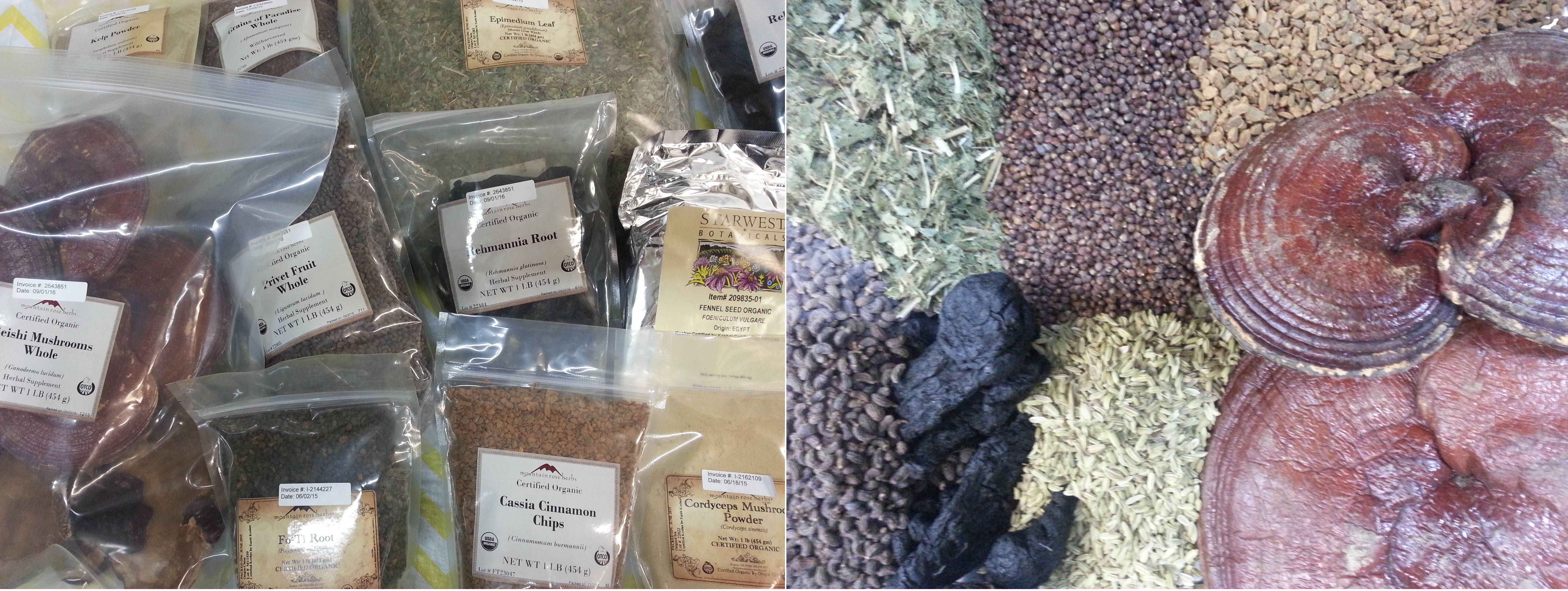
Pre-processing of our Ancestor Treasure formula

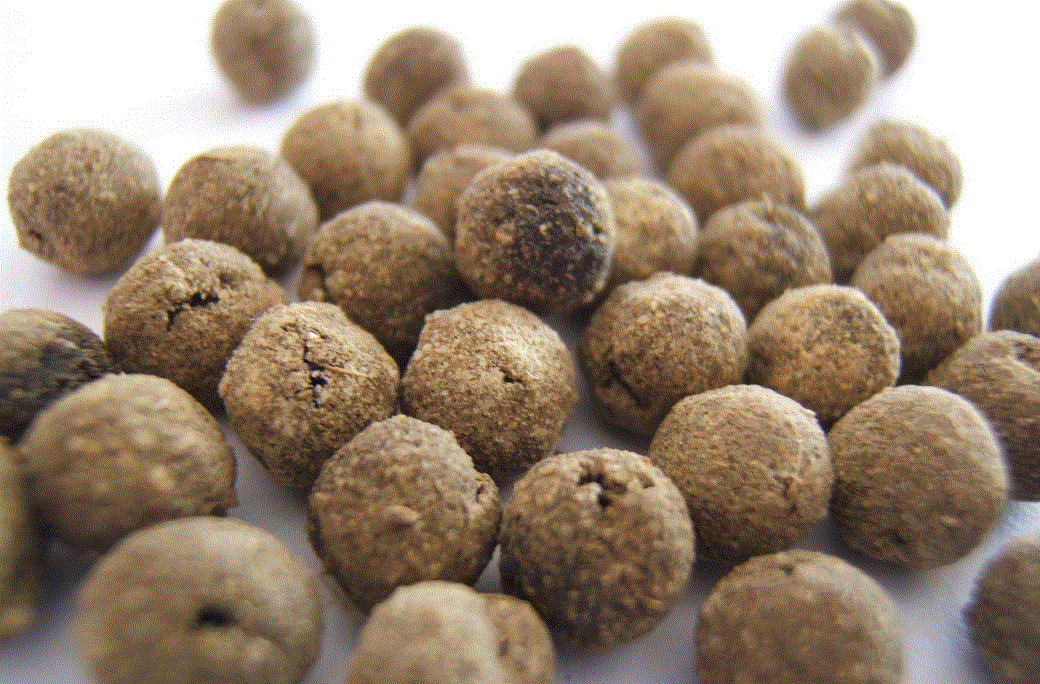
What are teapills?
Teapills (sometimes spelled Tea Pills or Tea-Pills) are very small round herbal tablets that provide an excellent vehicle for herbs and holistic medicine to be swallowed whole. Teapills can also be easily carried on the go and only need glass of water to take. Teapills are often preferred over tablets because they are easier to swallow. They are about half the size as shown in the photo.
How do I take my teapills?
Teapills are traditionally taken orally - 8 teapills at a time and 3 times per day. Alternatively, 12 can be taken 2 x per day (check the supplement facts for each product for specifics).
How are our teapills different?
Our teapills are made with certified organic herbs and certified organic brown rice flour. Traditionally, Chinese teapills are sugar coated; we do not sugarcoat our teapills. Teapills are often preferred over tablets because they are easier to swallow. They are about half the size as shown in the photo. The teapills are handmade using a traditional process in small batches which results in you getting the freshest herbs and ingredients.
Our teapills are can be harder to swallow than traditional teapills because they do not have the sugarcoating. Because they are hand-made, our teapills will not be perfectly uniform and may have naturally occurring fibers or small stems.
What are herbal powdered formulas?
Our powdered formulas contain only the listed ingredients for each formula. This is the purest form of the herbs as they have simply been ground into a powder and put into a bottle for you.
How do I take herbal powdered formulas?
Herb powders are mixed with tepid water, juice or honey. It should first be made into a paste before being diluted further, otherwise they will just float at the top of your drink. The best way to use powders is to make a tea by using a French press,(an inexpensive coffee press), and by pouring boiling water over the herbs and stirring them a few times, then straining them in the press after they have infused in the hot water 10-15 minutes.
How are herbal powders different?
Herb powders are not for everyone! You will actually taste the herbs if you take them this way. We have heard powdered herbs described as “earthy”, and “like eating dirt”; this is a semi-course ground powder with some small pieces of herbs and it does not going to dissolve in liquids. Others prefer powders as they can conveniently add all of their formulas to a drink or yogurt and they do not mind the taste.
Herb powders only contain herbs and do not contain brown rice flour. One form or the other would not be considered more potent if comparing the powder to the teapills; it would simply be a personal preference as to which form you use. We provide a measuring spoon with your powder, but the only true way to measure the powdered herbs is by weight with a scale.
Do you offer a free online evaluation?
We offer an automated evaluation, but ultimately this is a self-care website and the evaluation results are not prescriptions.
Free Online Health Evaluation Linked Here
*Dietary supplements and natural topical remedies should not be relied upon in an emergency situation. Call your national emergency line or 911 if you are having a medical emergency.
Do you take phone orders?
We only take orders online and do not offer a phone support. You can contact us at info @agelessherbs.com or using our contact form; we are very good at responding quickly if it is a query that our customer service team can address for you.
How long do I take tonic formulas?
It depends largely on the chronic nature of your health imbalance. The Chinese have a saying that roughly goes, "One month natural treatment for every year afflicted”. While you will likely observe improvements in your condition in the first few months of herbal therapy, it could many months or even years to actually reverse a severe chronic health condition. It is important to have realistic expectations with health conditions that have been developing over a number of years, and most diseases have been developing for many years before they are actually diagnosed. You would discontinue use a couple of months after symptoms abate.
When should I take my herbs?
The most important thing is that you DO take your herbs. Ideally, they would be taken 15 minutes before or after a meal (there are some exceptions with formulas for acute conditions as directed.), but it is much more convenient for most people to take their herbs with a meal so that they can remember to take them. Some people with very hectic schedules find it most convenient to take their powder mixed with juice one time per day, but it would be better to spread out applications 2-3 times throughout the day. We have run in to a few highly sensitive people who cannot take Qi tonics at night as it interferes with their sleep.
How long does a bottle of herbs last?
Powders-Last about a month (there are a few exceptions-check the product details). We provide a measuring spoon with your powder, but the only true way to measure the powdered herbs is by weight with a scale.
Teapills-A bottle of tea-pills will typically last about 5 weeks, but varies as different herbs have different densities; an example would be that roots are much denser than leaves. Some formulas contain more root than leaf material and therefore the tea-pills are heavier. After sampling each formula multiple times, 1000 tea-pills weighs at most 120 grams. We weigh each bottle of teapills to 124 grams; theoretically, each bottle contains around 1000 teapills, and often more. (there are a few exceptions-check the product details).
How long do my herb formulas last; when do they expire?
Dried herbs don’t really 'go bad' unless they are exposed to moisture; however, they will become less potent over time at different rates of time depending on their storage conditions. If you think about the spices in your kitchen, you have probably noticed that they lose their vitality faster if they are exposed to heat, sunlight, or moisture; even when stored well, Leaf-type herbs are only going to be vital for a year or so. Roots and spices tend to last for several years. The tea-pills have leaf and root herbs, so some aspects of the tea-pills are going to be devalued within the first year; it is best if our formulas are consumed within 6 months of purchase. If not stored properly, the herbs can be exposed to moisture; if they begin to smell moldy than you would not want to dispose of them. It is also important that those utilizing powders not extract the herbs with a wet or soiled spoon when preparing their herbs.
How many formulas can I take at one time?
It is typically recommended that you limit your Ageless Herbs® formulas to 3-4 formulas at a time, focusing in on your most chronic health conditions first. After those conditions improve, you can move on to other formulas to target specific lingering issues. Most people find that when they address the 'root' imbalances with the tonic herbal formulas, many seemingly unrelated symptoms begin to clear up too.
What is the dosage when I combine formulas?
The dosage would remain the same as recommended on the label unless you are combining 2 very similar formula. Examples would be when combining 2 Kidney tonics such as Ancestor Treasure formula and Yin Valley formula to balance Yin and Yang, you might use half of each. .
Are there formulas that cannot be combined, or will negatively interact with each other?
Any Ageless Herbs formula can be combined with another Ageless Herbs formula or vitamins.
Where can I purchase Ageless Herbs® formulas?
Only on our website; we do not wholesale our herbs to stores or online companies, therefore, the freshness and purity of any formula bought from an unauthorized source cannot be guaranteed by us. We cannot control people trying to resell product on Ebay or Amazon, and will not be held responsible for the quality or safety of herb formulas bought through 3rd parties online.
Are your formulas Chinese patent remedies?
No, Chinese herbal patent remedies require many specific herbs that we cannot grow here in North Carolina, or do not have reliable certified organic, sustainably sourced botanicals for. These are our own modified botanical formulas that were formulated by Dr. Catherine Browne.
Can I take vitamins with Ageless Herbs® formulas?
Yes, you can use the vitamins with the herbs. Think of vitamins as catalysts that allow your body to absorb and utilize nutrients more efficiently. Think of the herbs as nutrients.
Can I take Ageless Herbs with my pharmaceutical medications?
We cannot know if our herbs will interact with your prescribed medications; this would be a question for the prescribing health care professional or your pharmacist. Of course, unless he/she is trained in phyto-pharmacology they will be unable to give you an educated answer.
Can I take Ageless Herbs formulas if I am pregnant or breastfeeding?
Not unless your personal licensed health care practitioners advocate such supplemental care.
Do your formulas contain gluten or allergens?
We do not knowingly add any ingredients that contain gluten, and do not have any wheat ingredients process in our manufacturing facility. We do use Organic Brown Rice Flour as a binder. However, our suppliers of certified organic ingredients also manufacture products with nut trees and other allergens and may be present in the products in trace amounts.