
Cold-Flu
Colds and Flu's in Traditional Chinese Medicine 
Chinese medicine recognizes viruses as external pathogens. However, there is more emphasis in Chinese medicine in the importance of maintaining a strong immune system, or "Wei Qi", so that the external pathogens cannot attack the body. In other words, your Wei Qi (Chi) must be weak or compromised in order to become vulnerable to a viral infection.
Ideally, your immune response, or Wei Qi, will be strong as a result of good lifestyle choices such as sufficient sleep, regular exercise, good nutrition, and stress management. Avoiding prolonged exposure to the elements is also important in maintaining a vigorous Wei Qi. In Chinese medicine, colds and flu's are delineated into several different energetic classifications. Here we will outline the different types of cold and flu viruses that you will likely encounter, and then describe the best home remedies for these specific patterns that you can use to address cold or influenza virus. For best outcomes using self-care, combine associated Aroma Acu-Sticks® to acu-points, topical remedies, and good lifestyle practices.

Acupressure Points for Chronic Recurring Cold-Flu Used Daily for Prevention
Learn How to Effectively Use Essential Oils on Acupressure Points Linked Here!
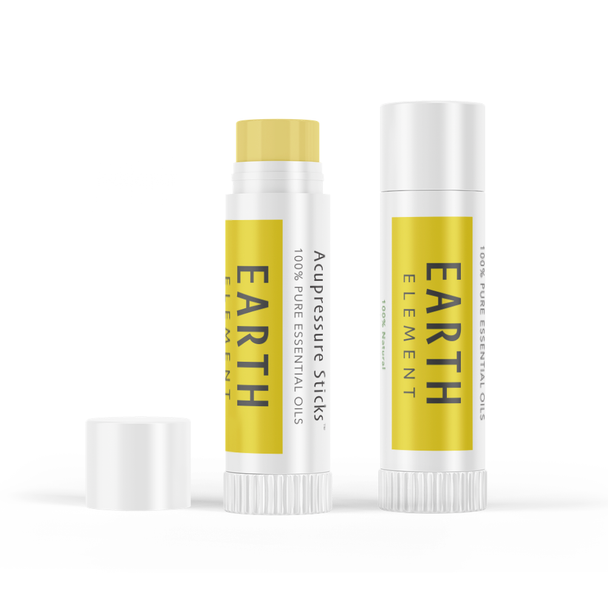
- Apply the Earth Element Acupressure Stick to Acupressure Point Stomach 36
- Apply the Earth Element Acupressure Stick to Acupressure Point Spleen 6
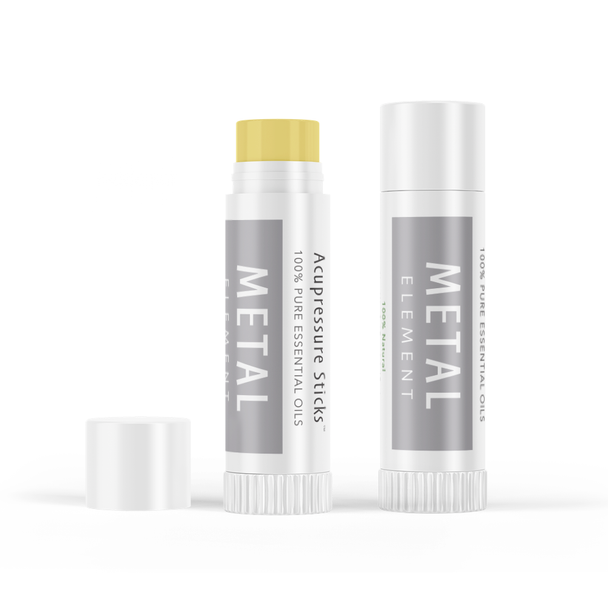
- Apply the Metal Element Acupressure Stick to Acupressure Point Lung 7
Acupressure Points that Expel External Pathogens Related to Cold-Flu
- Apply the Metal Element Acupressure Stick to Acupressure Point Large Intestine 4
- Apply the Metal Element Acupressure Stick to Acupressure Point Large Intestine 11
- Apply the Wood Element Acupressure Stick to Acupressure Point Liver 3
Cold and Flu Basic Chinese Medical Theory on External Pathogens
The basic external pathogenic influences are:
- Wind
- Cold
- Heat
- Damp
External Pathogenic Wind
Theoretically, wind enters the body through the back of the neck area or nose carrying the pathogen. It first attacks the Lung system (including the sinuses) because the Lung organ system is the most external Yin organ, and thus the most vulnerable to an external invasion. External Wind invasion is marked by acute conditions with a sudden onset of symptoms; this differs with Internal Wind that has symptoms such as tremors and develops over time due to deficiencies and imbalances of the body. External Wind combines with one or more of the other pathogenic influences:
External Pathogenic Cold
"Wind-Cold" evil external pathogens typically include symptoms such as chills, stiffness, headache radiating from the back of the neck, desire for warm fluids, and phlegm with a clear or white discharge.
External Pathogenic Heat
"Wind-Heat" evil external pathogens can include a sore throat, swollen glands, fever (or the feeling of heat in the body), heat rashes, irritability, headache radiating from the temples and eyes, and phlegm with a yellow, orange or green color.
Dampness
"Dampness" often combines with "Wind-Heat" or "Wind-Cold" as seen above, and is marked by lethargy, a foggy brain, aches and pain, and damp discharges.
Home Remedies for Cold and Flu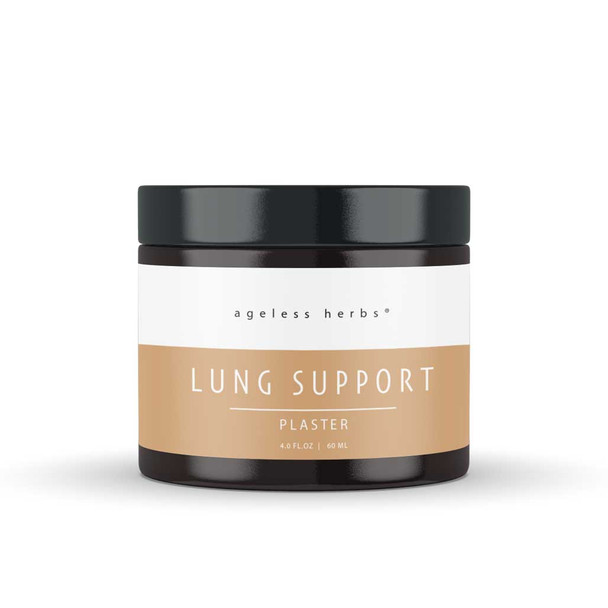
It is not always possible to maintain balance in our lives and manage stress well, so you may find yourself the victim of an "evil exterior pathogen". Treating these pathogens quickly and effectively is essential to prevent the pathogen from traveling more deeply in to the body and causing chronic conditions. Home remedies that can treat colds and flu's effectively include herbs and essential oils that are diaphoretic; they open the pores and allow the pathogen to release back out to the exterior through perspiration. From a Western perspective, herbs and essential oils that treat cold and flu contain chemical constituents that are highly anti-viral, anti-bacterial, and in some cases, anti-fungal.
Treatment of Wind-Heat Pathogens
If caught early on, the herb echinacea is an effective anti-viral that is non toxic and gentle enough for use with children for colds and flu's. It must be taken at regular intervals; double the recommended dose with the onset of a cold or flu during the first few days of treatment, and dose about 6 times per day; follow through for a few days after symptoms have subsided is important also. Echinacea is a practice choice because it is readily available at corner drug stores, health food stores, and even high end grocery stores. You can use it as a tea (use 2-3 teabags for therapy), as a capsule, or as a tincture. There are also sweet glycerites made especially for children. The echinacea roots are more potent than the echinacea leaf, but the leaf does work.
Yin Qiao is a highly effective herbal formula that could best be described as 'echinacea on steroids'. This is the best herb formula for colds with signs of Wind-Heat, and is even effective if you are not able to begin treatment at the early onset of symptoms. Additionally, if you have been exposed to the cold or flu virus you can use this formula to prevent an infection.
Anti-viral essential oils for Wind-Heat pathogens include lavender, peppermint, and everlasting. Essential oils can be diluted to 5% in a vegetable oil such as olive oil and added to a bath to treat a cold or flu. Essential oils can be added to a humidifier or simmering pot of water to prevent or treat infections for the whole family.
Therapeutic herbal baths are made by making a strong infusion of herbs; this potent tea is added to the bath water after cooling. For Wind-Heat pathogens (again, colds and flu's with sore throat, fever, agitation), cool herbs that produce a sweat are used such as elder, yarrow, and catnip. Catnip is especially effective at bringing a fever down and all three are a safe alternative treatment for children's colds.
Wind-Cold Pathogens
Herbs and spices with warming qualities will be most beneficial with a Wind Cold pathogenic virus. Cinnamon is a highly anti-viral spice that has been shown in studies to effectively combat flu viruses, and the essential oil of cinnamon is readily available and inexpensive. A soup with a base of chicken broth can be prepared with green onion and grated ginger for an easy and effective home remedy for Wind-Cold pathogens, and all of the ingredients are available at most grocery stores.
Dampness
Dampness often combines with Wind-Heat pathogens marked by colored phlegm which is a sign of infection, and Wind-Cold pathogens with clear or white phlegm.
Anti-bacterial essential oils such as thyme and marjoram can be added to a pot of steaming water (watch for burns), to treat sinus infections and lung infections with colored phlegm. Eucalyptus and peppermint help open the sinuses and drain phlegm congestion. Diluted essential oils can be applied to the skin over the sinus cavity to treat sinus infections also. The pure essential oil of tea tree can be used for fungal infections of the sinuses. In both the case of a Wind-Cold, or a Wind-Heat pathogen, saltwater irrigation with a netti pot dries phlegm and fights infection. With infections, it is important to bring in potent antibiotic herbs such as goldenseal or coptis to treat the infection internally. Take herbal antibiotics regularly and continue for a number of days after symptoms have abated.
Kim SK, Bae H. Acupuncture and immune modulation. Auton Neurosci. 2010 Oct 28;157(1-2):38-41. doi: 10.1016/j.autneu.2010.03.010. Epub 2010 Apr 15. PMID: 20399151.
Rogers PA, Schoen AM, Limehouse J. Acupuncture for immune-mediated disorders. Literature review and clinical applications. Probl Vet Med. 1992 Mar;4(1):162-93. PMID: 1581655.
Schwartz C. Chronic respiratory conditions and acupuncture therapy. Probl Vet Med. 1992 Mar;4(1):136-43. PMID: 1581651.
Zhang DH, Wu KL, Zhang X, Deng SQ, Peng B. In silico screening of Chinese herbal medicines with the potential to directly inhibit 2019 novel coronavirus. J Integr Med. 2020 Mar;18(2):152-158. doi: 10.1016/j.joim.2020.02.005. Epub 2020 Feb 20. PMID: 32113846; PMCID: PMC7102521.
Wang X, Liu Z. Prevention and treatment of viral respiratory infections by traditional Chinese herbs. Chin Med J (Engl). 2014;127(7):1344-50. PMID: 24709192.
Choi HJ. Chemical Constituents of Essential Oils Possessing Anti-Influenza A/WS/33 Virus Activity. Osong Public Health Res Perspect. 2018 Dec;9(6):348-353. doi: 10.24171/j.phrp.2018.9.6.09. PMID: 30584499; PMCID: PMC6296812.
This information has not been evaluated by the Food and Drug Administration. This information is not intended to diagnose, treat, cure, or prevent any disease.